Zero Parades: For Dead Spies Review
I detest Halloween. Every year a steady trickle of kids scuttle around the neighborhood scrounging for candy. My ire is not aimed at the kids though. My dismay is directed at Halloween — this cultural import — foreign to our climate, yet masterfully grafted onto it.
Early in Zero Parades, you meet two children left to their own devices. Due to general mismanagement of the city, schools are taking weeklong breaks, leaving them to watch television all day. Predictably, the scope of things that matter to these kids has been entirely supplanted by a cartoon show called Sixty-Six Wolves. And you will not get how cool these wolves are or how many there are (66). Each wolf has its own superpower and tragic backstory. The kids can recite the show’s lore at the drop of a hat.
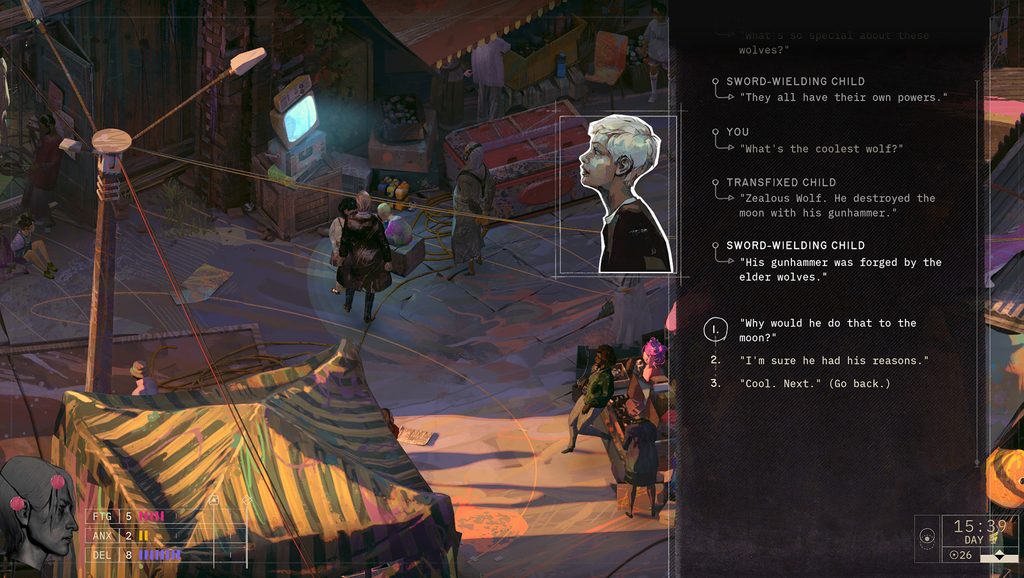
I have been here before. But the roles are reversed. I am now trapped inside the drab adult, feebly asking if there is not anything else they can watch. Maybe something locally made? The concept is almost alien to the kids. They vaguely remember some show with dolls that peddle hamfisted educational messages. Morals and stuff.
Boring.
In real life we do in fact have our own »local« version of Halloween. Fastelavn. It has all the same base components. The costumes, the candy, kids wailing about. There just is no sick Fastelavn movie with an iconic synth score, no Fastelavn episode of your favourite TV-show. Everything related to Fastelavn is decidedly uncool. Comely, homegrown, safe. There are no 66 wolves here, each with their own cool trademark and collectible. I have been here. But I was the kid that wanted to watch the show that was fun and engaging. I did not believe my parents when they told me it »wasn’t good for me«. It is just a cartoon. Cool your jets, mom.
Yet, here I am in a fictionalized version of events, where I am the one begging these kids to spend their time on something else. The added context is that I know that these wolves did not appear ex nihilo. They are the product of a global superpower, the techno-fascists of La Luz. It is almost effortless to see how thinly veiled the wolves are messengers of jingoistic propaganda. It is harder to enjoy the wolf cartoon after seeing them as the harbinger of the berrion bombs that the Luzian military used to erase entire cities off the map. As a last-ditch effort to contain the deluge of fascist mass media, the Developed World has put up a Cultural Blockade, forbidding Luzerian imports.
I do not even personally like Fastelavn that much. Neither costumes or candy appeal to me. And people still do celebrate. Just a bit less each year. Halloween has the panaché, the ineffable »it« that makes it cool to children. So stores inevitably stock up on Halloween-themed products to sell to a willing audience. No need to invent a market from scratch. It is effortless to import cheap pumpkin shaped plastics from the global culture factory. Every year store shelves are stocked with more imports and the scuttle of kids in costumes steadily increases. Meanwhile Fastelavn is delegated to a municipal activity, something schools do out of obligation. It reeks of uncool. Desperate. It is the death rattle of culture.
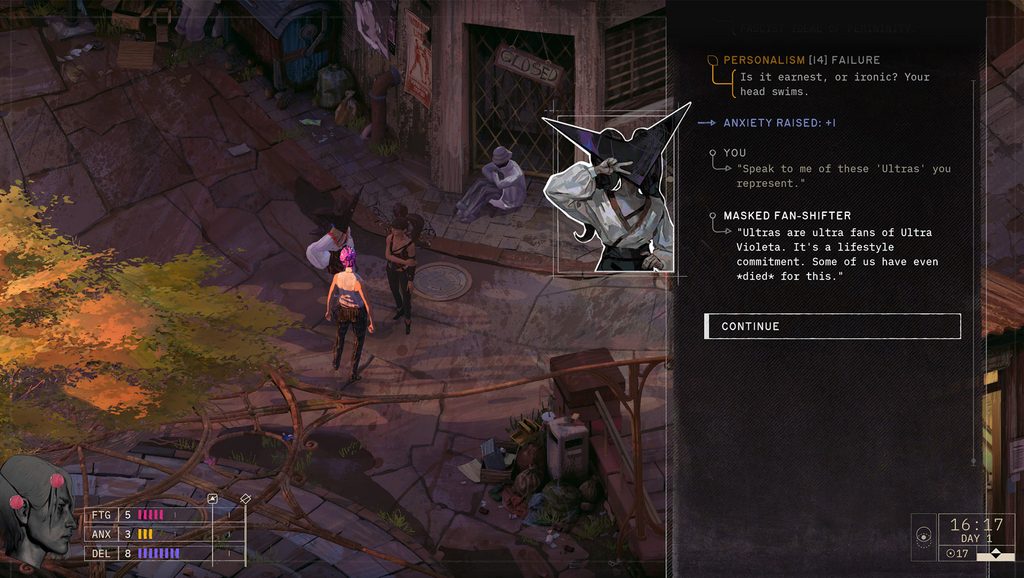
When you speak to young people they only express bewilderment at how stupid the Cultural Blockade is. The clothes, music and television shows peddled by techno-fascists are popular simply because they are better than the alternatives. Why would you deny yourself the pleasure and comfort of these products, just because it comes from abroad? If this is what imperialistic subjugation looks like, then it sure feels nice. And clearly, the blockade has not even been effective. Bootlegs and cheap knockoffs are plentiful. The only thing that has been achieved, is that everyone has access to worse versions of products, instead of the genuine articles. A pair of K-Pop fan analogues are outraged that their primary vector for self-expression has effectively been outlawed. The irony of this entailing them »fan-shifting« into the literal shape of their icon is lost on them.
As a kid I remember a gruff resistance to »foreign trash« as it was called. A 20th century vestige. Even at a young age I found that resistance to be crass. It smelled like protectionism. A fear of change, of new things. Conservatism. Indeed, sharing art and experiences across borders is a way to build global solidarity. I have always felt more seen and heard by fellow fans of Cardcaptor Sakura or Persona 3, than people who cheer for the local football team. More and more English words slowly creep into my native tongue. The first time you realize this process, there is an accompanying sense of dread. My language will be lost. But eventually, what follows is acceptance. Everything changes. Language and culture has never been an unchanging monolith. It is active practice that shifts and bends with the times. You can never step in the same river twice and all that.
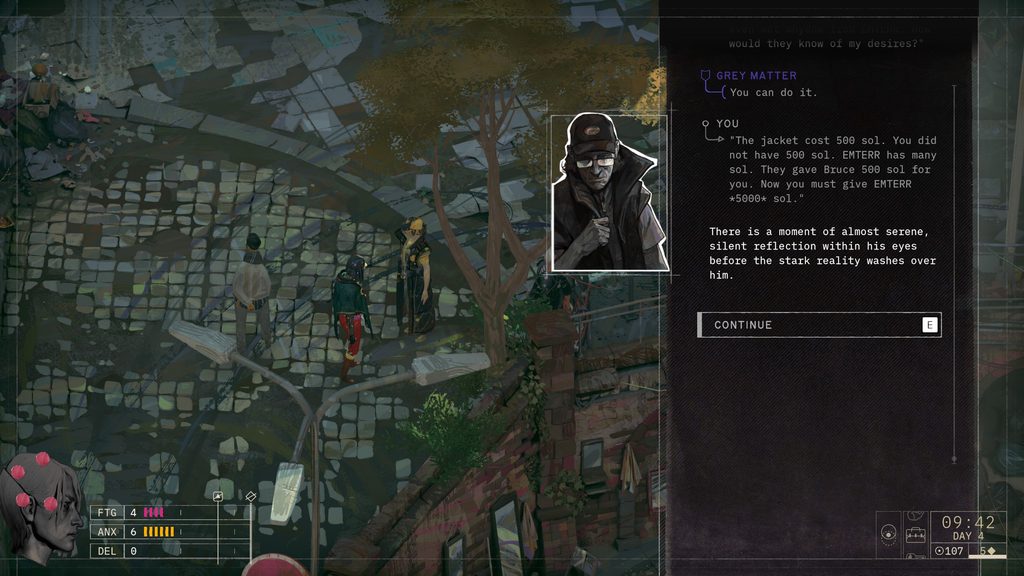
In another part of town, you find a man with a very cool jacket. He is a fashionista of sorts, living and breathing for the scene. You find him in a bit of a bind though, since he has unknowingly signed up for a buy-now-pay-later scheme perpetrated by The Bank. He just wanted a cool jacket and now that desire has been weaponized against him. He is unknowingly being hollowed out by life-changing debt. You can fix this conundrum, yet the experience has radicalized him. The guy is clearly a moron and a political illiterate, but he decides on the spot that he wants to be a communist. He is unclear on the details, but clearly something is wrong if the allure of a cool jacket can be subverted into a tool of control. It is a political awakening, not born from intellectualism or strong belief, but from a vague sense of wrongness. Achingly familiar.
I feel complicit in the cultural loss of my own home. I frown at Danish media. It is sluggish and overly thespian. Even fun genre pieces are overlain with a thick coat of social realism. And the hard reality is that the talent pool simply cannot compete with an international market. A mere 6 million people speak the language. As a market it is impossible to compare with English speaking audiences. While I did not turn to our main cultural hegemon for entertainment, I instead got lost in weeb shit. Japanese media was both a vector for self-expression and a way to find peers where I could not otherwise. But Japan is — in its own way — also another cultural heavyweight. Did I evade my draft in the global culture war? In that case it feels like dodging fighting a losing war — nay, a suicide mission.
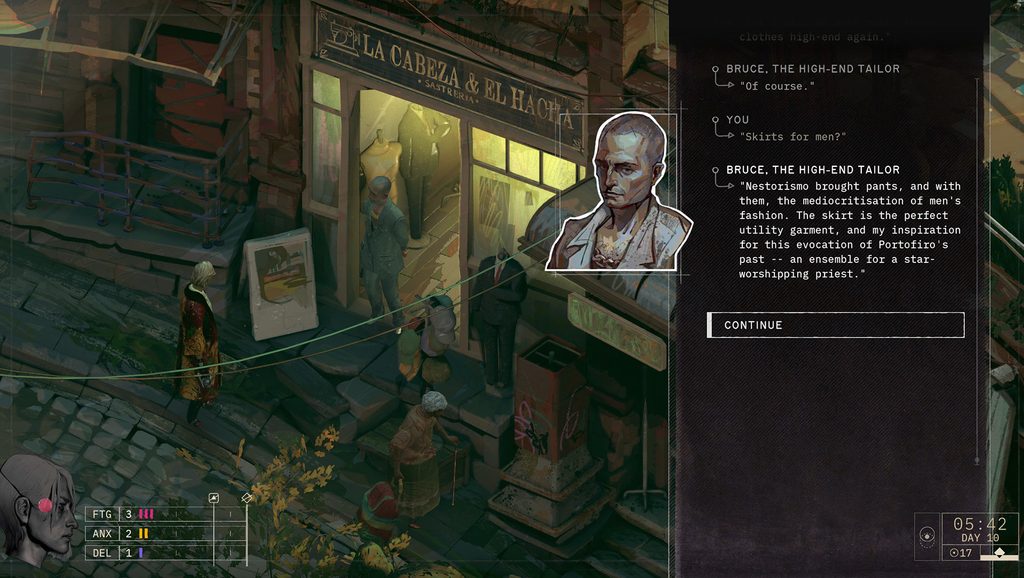
The man’s tailor is one of the biggest proponents of the Cultural Blockade you can talk to. He is a high-end artisan and has trouble competing with the torrential wave of cheap clothes churned out by the global market. And while he is dissatisfied that craft and care is losing out to mass-production, it is not actually at the core of his worries. He explains how Portofiro is slowly being pressed into another shape. In the past it was not uncommon for men and women to wear long skirts. With the rapid adoption of foreign imports, this fell out of style in favour of the garments worn by the dominant culture. It is not just a matter of media, culture is the material reality we inhabit. Something that fundamentally was is reduced to a wrinkle, something to be flattened by the monumental force of mass-culture.
My complicity lies in capitulation. I played a part in giving up a piece of our self-determination. We lost something. Not just the capacity to express the unique lived experience of this corner of the world, but the ability to even produce a distinct way of life.
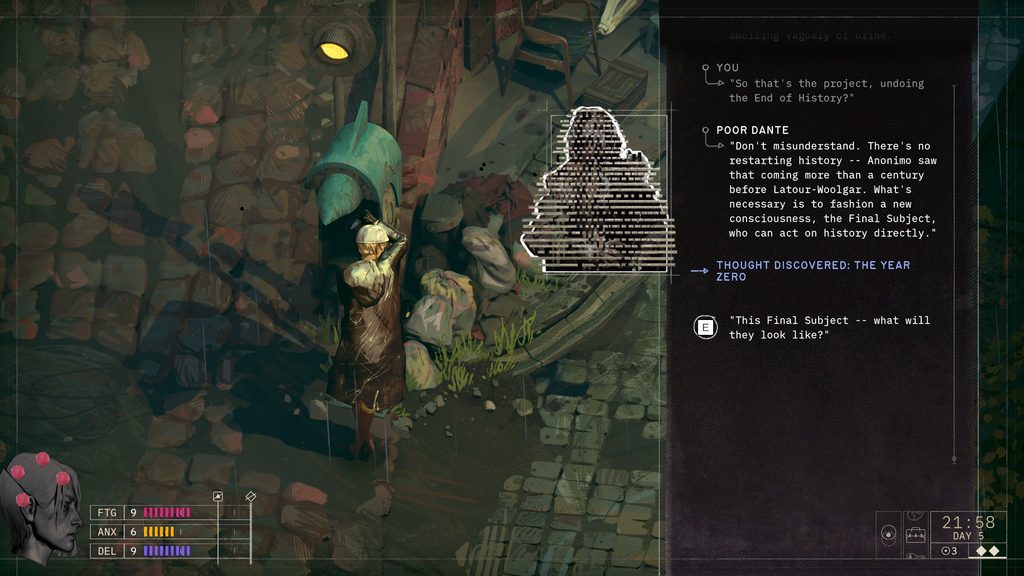
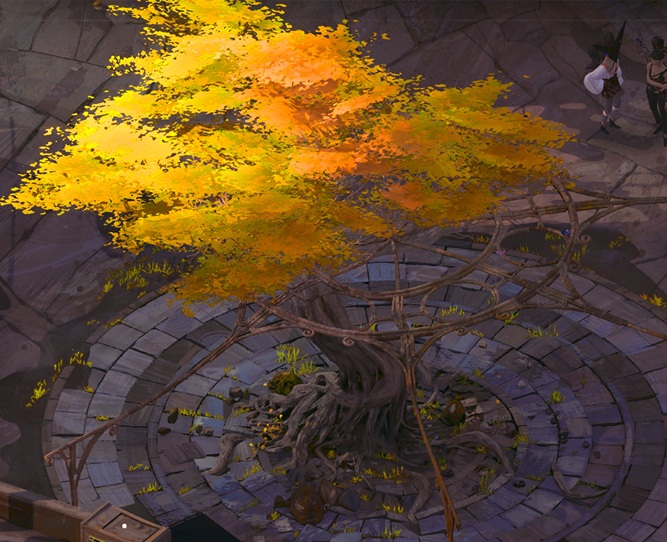
This is indeed the ultimate goal of the techno-fascists. The flattening of everything and everyone until they can become vessels for the one true person deemed worthy of existing — The Final Subject. In the town square there is a beautiful tree in bloom. You learn that this ginkgo tree is another Luzerian import. As part of their imperialistic expansion, the fascists planted ginkgos in all the places they annexed. The trees have a special attribute. They are all clones of the same tree and all bloom and wither at the exact same time, regardless of place and climate. The bloom is beautiful, yet serves as a reminder of total unification. Culture as a process of absolute singularity. As with the gingko tree, the Final Subject will all be clones.
When my local shops once again put up Halloween trinkets, I will think of the ginkgo trees.

Leave a Reply